Antibiotics and the Gut Microbiome
Understanding hidden risks in antimicrobial resistance
Antibiotics, the Gut Microbiome, and Hidden Risks
Antibiotics save lives, but what do they leave behind in our gut? In two recent studies, my collaborators and I explored how antibiotics affect healthy adult microbiomes and the hidden reservoir of antimicrobial resistance (AMR) within them.
Key Findings
Antibiotic Scarring
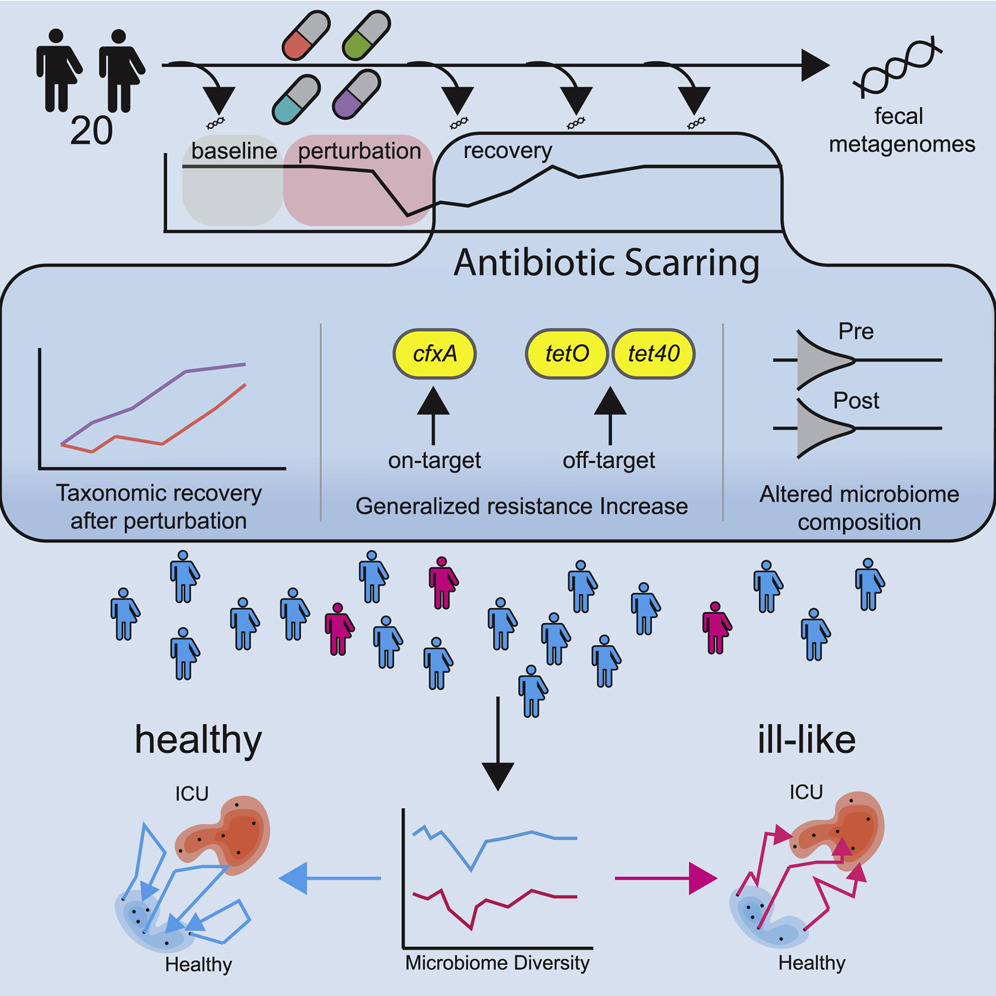
Our first study found that even short courses of antibiotics cause a dramatic drop in gut bacterial diversity, known as “antibiotic scarring.”
Key observations:
- Most microbiomes rebounded within two months
- Azithromycin delayed recovery, leading to lasting shifts in composition
- Some microbiomes ended up resembling those of ICU patients
The Hidden Reservoir
The gut microbiome serves as a reservoir for antimicrobial resistance genes, even in healthy individuals who haven’t recently taken antibiotics.
Clinical Implications
These findings highlight the need for:
- Responsible antibiotic use - Even short courses have lasting effects
- Microbiome monitoring - Tracking recovery after antibiotic treatment
- Probiotic research - Developing strategies to restore microbiome health
Publications
-
Anthony, W.E. et al. (2022). Acute and persistent effects of commonly-used antibiotics on the gut microbiome and resistome in healthy adults. Cell Reports, 39(2).
-
Anthony, W.E. et al. (2020). The Gut Microbiome as a Reservoir for Antimicrobial Resistance. The Journal of Infectious Diseases.
Antibiotics are deployed against bacterial pathogens, but their targeting of conserved microbial processes means they also collaterally perturb the commensal microbiome.