Synthetic Biology for Biofuels
Engineering Rhodococcus opacus for lignin valorization
Synthetic Biology for Value-Added Product Synthesis
Rhodococcus opacus has emerged as a microbial workhorse capable of transforming lignin—a waste product of plant biomass—into valuable biofuels and chemicals.
Research Focus
Our research focused on enhancing this bacterium’s ability to produce triacylglycerols (TAGs), a key biofuel precursor, even under nitrogen-rich conditions.
Key Achievements
Transcriptional Regulation
By overexpressing specific transcriptional regulators, we:
- Decoupled TAG production from nutrient limitation
- Boosted lipid yields on lignin-derived compounds
- Identified key regulatory networks controlling lipid metabolism
Genome-Scale Modeling
We developed a genome-scale metabolic model for R. opacus, named iGR1773, which:
- Accurately predicts metabolic fluxes using transcriptomic data
- Enables precise engineering strategies
- Optimizes biofuel production pathways
Impact
These breakthroughs mark critical steps toward more efficient lignin valorization, turning industrial waste into sustainable fuels and chemicals.
By leveraging:
- Synthetic biology
- Metabolic modeling
- Genetic engineering
We’re bringing the vision of cost-effective, second-generation biofuels closer to reality.
Publications
-
Anthony, W.E. et al. (2024). Increased triacylglycerol production in Rhodococcus opacus by overexpressing transcriptional regulators. BMC Biotech Biofuels, 17:83.
-
Anthony, W.E. et al. (2019). Development of Rhodococcus opacus as a chassis for lignin valorization and bioproduction of high-value compounds. Biotechnology for Biofuels, 12(1):1-14.
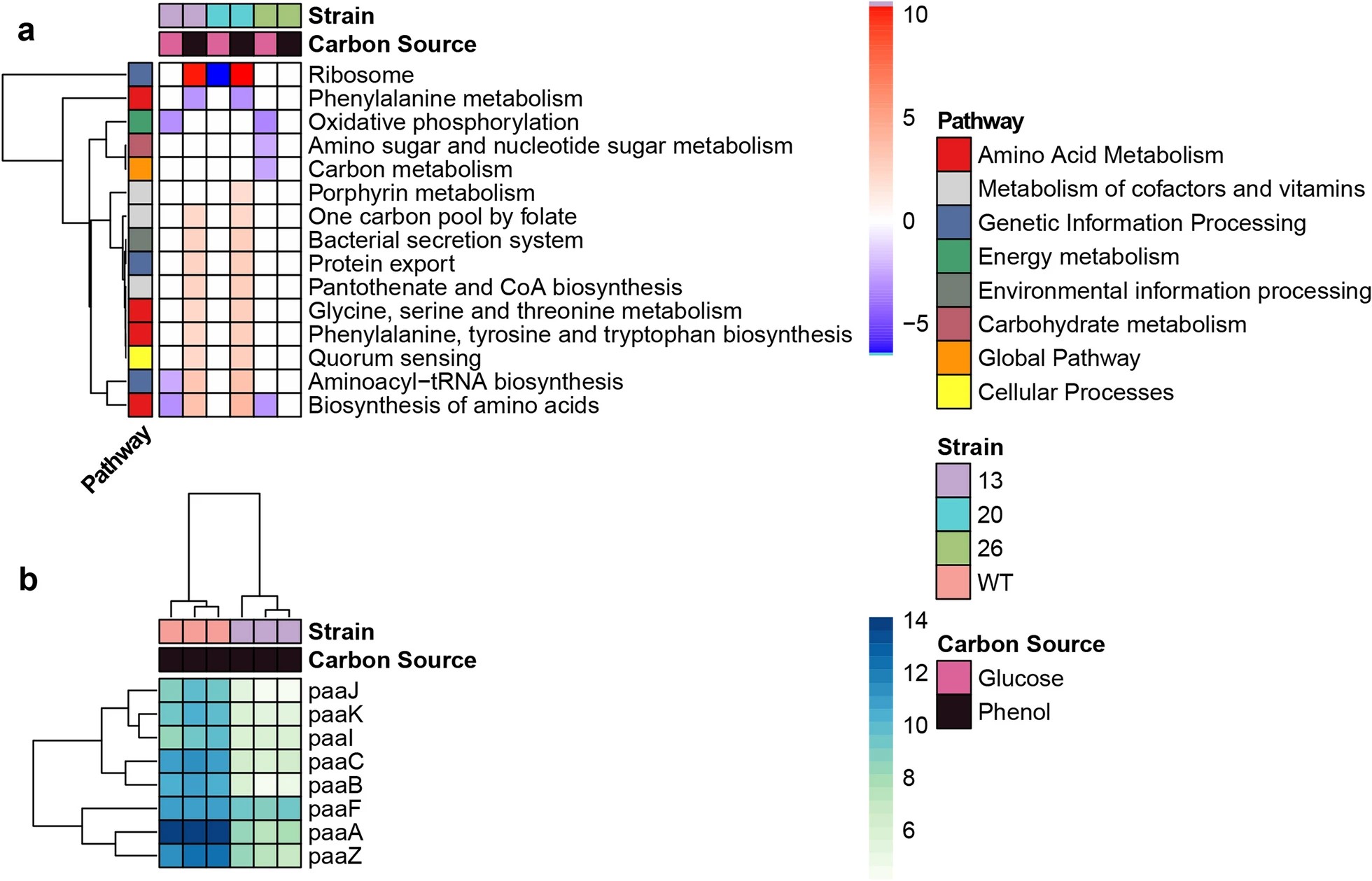
Heatmap visualizing differential expression of KEGG pathways after transcriptional regulator overexpression.